


An international research team with the participation of botanists from Charles University has disproved an influential scientific assumption. Extensive research on 42,000 samples of alpine plants showed that species with duplicated DNA content (so-called polyploids) do not grow more frequently at higher elevations. Their current occurrence is determined by historical dispersal following the retreat of glaciers rather than by today's extreme mountain conditions.
Polyploidy, or the multiplication of the entire DNA content, represents one of the main drivers of speciation in the plant kingdom. It represents a situation when a cell possesses three, four, or even more complete genome copies instead of the usual two sets. Polyploid plants do not only grow in the mountains; they also dominate among key crop species (such as potatoes, wheat, or bananas) and invasive species. Scientists long assumed that these genetically enriched plants are more resistant to extreme conditions and that frost or the harsh environment of mountain peaks gives them an advantage. Indeed, global comparisons show that the proportion of polyploid species increases toward the colder poles of the planet.
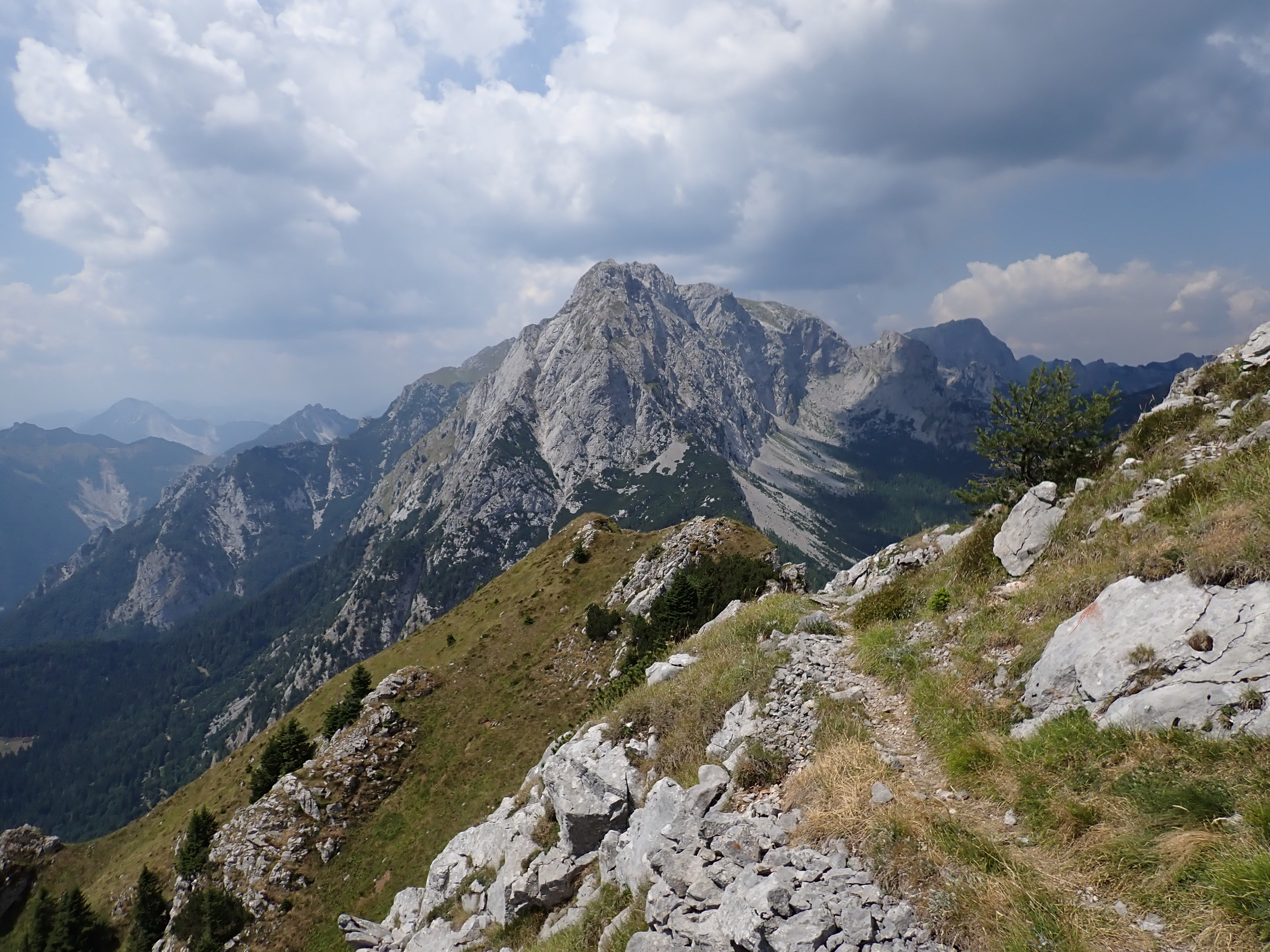
However, this assumption has now been disproved by an international study co-led by botanists from the Faculty of Science, Charles University (PřF UK), Filip Kolář and Tomáš Urfus. The team, led by researchers from the University of Innsbruck, examined an unprecedented dataset of 42,229 samples representing 1,103 flowering plant species across 101 mountains throughout the Eastern Alps.
"It turned out that genome duplication does not grant plants any universal superpower for survival at the highest mountain elevations. The results clearly show that the current distribution of plants in the Alps is an imprint of the dramatic history of ice ages rather than a direct consequence of today's climate," explains Dr. Filip Kolář from the Department of Botany, who co-led the study.
Instead of the expected increase, researchers found that the proportion of polyploid plants actually decreases with elevation. Conversely, the key factor determining their occurrence is the distance from so-called glacial refugia - areas where plants survived the last ice age. Plants with multiplied DNA content are more common in regions that were completely glaciated in the past and had to be recolonized by species after the ice melted. This effect was most pronounced in species with limited seed dispersal capacity.
This discovery changes the current understanding of how mountain flora is shaped and how it responds to climate change. It demonstrates that the ability to colonize new territories after glacier retreat was more important for polyploid plants than tolerance to alpine environments themselves. The research, published in the prestigious journal Nature Communications, thus connects evolutionary botany with the history of our planet and warns against direct extrapolation of global climate models to specific mountain ranges.
Bibliographical Citation:
Zeni, T., Margreiter, V., Unzeta, M., Urfus, T., Carnicero, P., Frajman, B., Wessely, J., Koutecký, P., Kolář, F., Dullinger, S., & Schönswetter, P. (2026). Polyploid frequency decreases with elevation but increases with distance to glacial refugia in the Eastern European Alps. Nature Communications, 17, 77752. https://doi.org/10.1038/s41467-026-77752-1